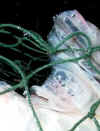
 Gas-bubble disease (which is uncommon) presents the opposite problem to
hypoxia. It is caused by over-saturation of the water with air. During summer it
is tempting to try and force as much oxygen as possible into the water but it is
important to realize that at any given temperature there is a maximum amount of
oxygen the water can naturally hold If this level is exceeded for example by
forcing air into the water under pressure the water can become supersaturated
with oxygen. Gas-bubble disease (which is uncommon) presents the opposite problem to
hypoxia. It is caused by over-saturation of the water with air. During summer it
is tempting to try and force as much oxygen as possible into the water but it is
important to realize that at any given temperature there is a maximum amount of
oxygen the water can naturally hold If this level is exceeded for example by
forcing air into the water under pressure the water can become supersaturated
with oxygen.
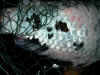 This problem can be detected by measuring total dissolved gases (DO,
nitrogen, argon, dissolved carbon dioxide etc.) though the equipment required is
expensive. This problem can be detected by measuring total dissolved gases (DO,
nitrogen, argon, dissolved carbon dioxide etc.) though the equipment required is
expensive.
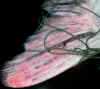 Gas bubble disease is supersaturating of gases in the water due to
pumping under pressure and/or cold water heating up to room temperature. Tap
water distribution systems are maintained under pressure at all times, both to
insure adequate flow and to prevent polluted water from outside the pipes to
enter in at leaks. Any additional gas introduced into these pipes (e.g., a leaky
manifold) will be dissolved at these higher partial pressures, and will often be
supersaturated when it emerges from the tap. Gas bubble disease is supersaturating of gases in the water due to
pumping under pressure and/or cold water heating up to room temperature. Tap
water distribution systems are maintained under pressure at all times, both to
insure adequate flow and to prevent polluted water from outside the pipes to
enter in at leaks. Any additional gas introduced into these pipes (e.g., a leaky
manifold) will be dissolved at these higher partial pressures, and will often be
supersaturated when it emerges from the tap.
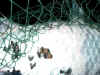 Also, gases are more soluble in
cold water than warm, so when gas-saturated cold water emerges from the tap and
warms up in an aquarium, the water becomes supersaturated and can form bubbles.
The problem resulting from this phenomenon is called gas-bubble disease. Also, gases are more soluble in
cold water than warm, so when gas-saturated cold water emerges from the tap and
warms up in an aquarium, the water becomes supersaturated and can form bubbles.
The problem resulting from this phenomenon is called gas-bubble disease.
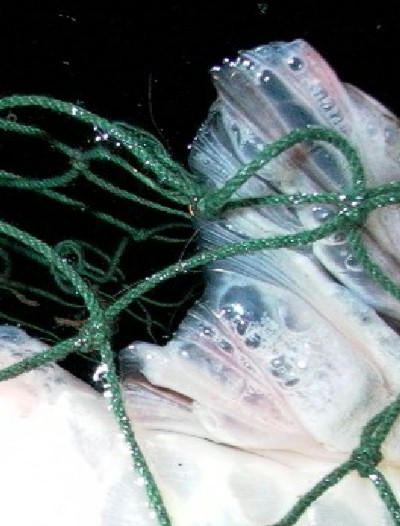
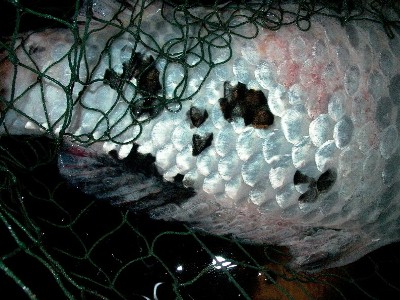
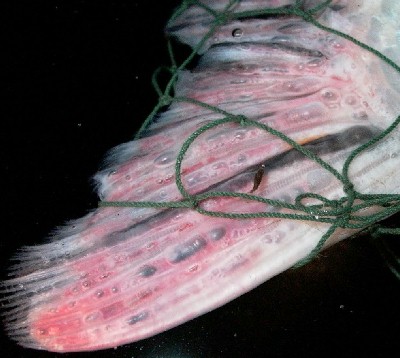
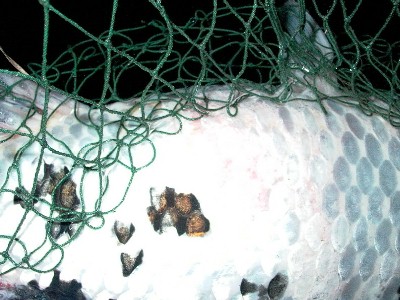
This is
characterized by the formation of gas bubbles in the body cavities of fish, such
as behind the eyes (causing exophthalmia) or between layers of skin tissue.
Typical signs of which are visible air bubbles in the eyes, gills and sometimes
in the skin. Small bubbles can form within the vascular system, blocking the
flow of blood and causing tissue death. Worse, bubbles can form in the gill
lamellae and block blood flow, occasionally resulting in death by asphyxiation.
At 140% saturation and higher, gas bubble disease can cause fish kills, although
the effect can cause some problems at 105-140% saturation.
Stirring up bubbles
during a water change doesn't hurt your fish, but it probably doesn't do much
for them, either. It may hasten the degassing a bit, but you certainly aren't
removing chlorine/chloramine by this method.
|